

Listen and follow
Introduction.
Planning is one of the most crucial skills for a manager, which is why OKR planning and management is gaining favor in important Tech Companies like Google, Microsoft, and Apple.
However, planning is a challenge in Taiwan’s tech companies due to the lack of structured training or guidance on corporate or project planning.
For RD projects, much of the planning is done by Project Managers (PMs), who juggle multiple aspects of project development but often end up frustrated and overwhelmed—they frivolously refer to themselves as “PM for Poor Man.”
Poor planning hurts. Ouch!
The consequences of poor planning include:
- Project delays
- Constantly shifting project parameters
- Departmental conflicts
- Frustrated employees
- Excessive meetings
I’ve witnessed projects extend over months, even years. CEOs are aware of these issues but often struggle to find solutions.
OKR Planning: Disciplined, Structured, Skillfull
Planning should permeate a company’s culture. Objectives and Key Results (OKR) management introduces a disciplined, goal-oriented, and progress-driven approach that enables companies to achieve big goals in short timeframes.

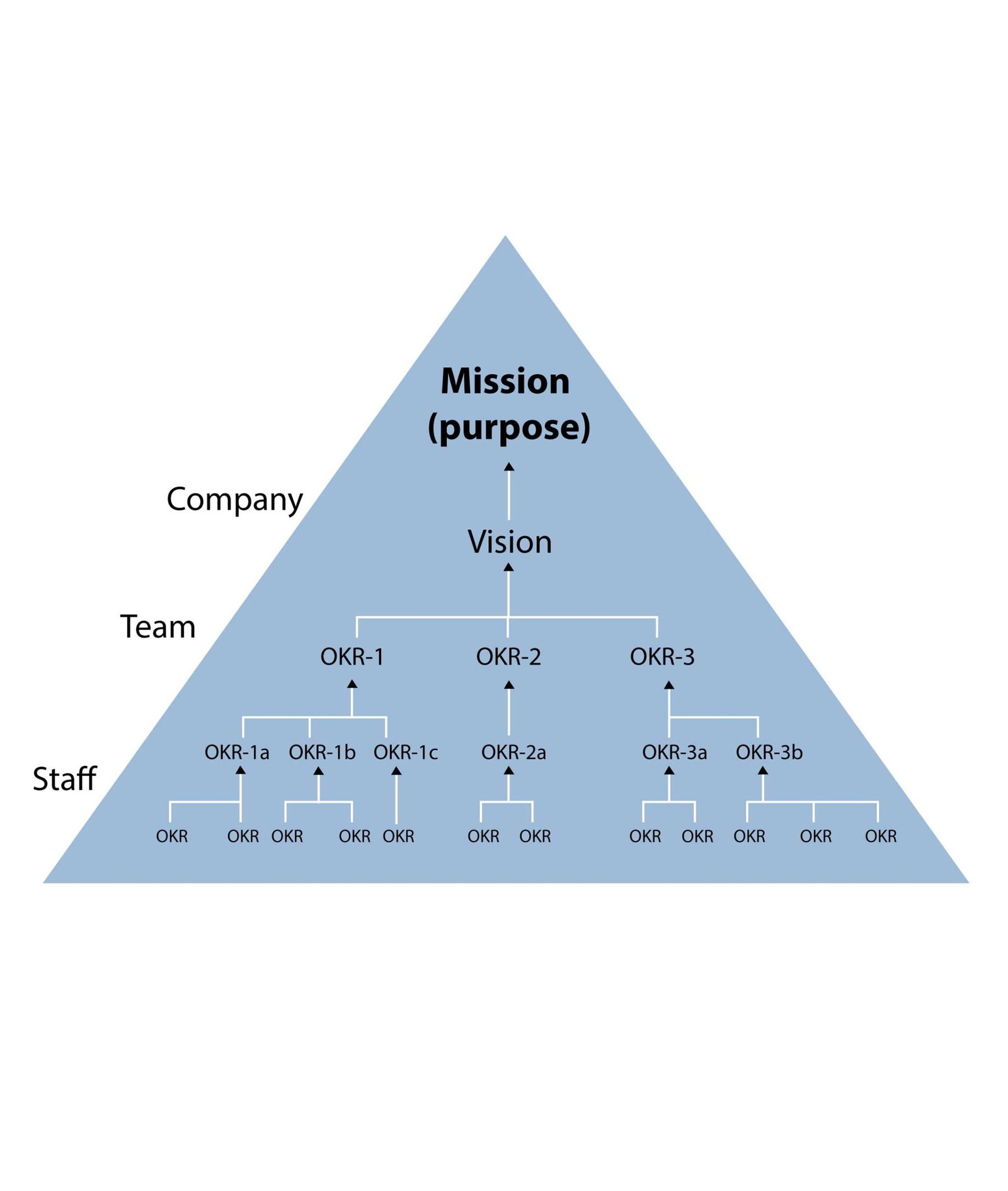
OKR Planning #1 – Seeing the Big Picture
Planning typically follows a linear, logical progression, outlining projects and tasks sequentially until they culminate in achieving an objective.
However, most tech projects are multi-dimensional, involving coordination among C-suite, RD, Marketing, Sales, Operations, and Factory departments. This can get extremely complex.
Alignment and Collaboration
OKRs originate from the company’s mission and vision, cascading naturally to projects and employees.
With this structure, managers and teams can better understand their roles and significance within the broader context. It fosters a sense of purpose, collaboration, sacrifice, and compromise across departments.

OKR Planing #2 – Educated Plans vs. Estimated Plans
A manager might ask an engineer, “How long will this task take?”
The engineer responds, “About a month.” The manager accepts this. This is bad planning!
This example is a crude estimation of task expectations, fraught with risks and likely to lead to disappointment.
Break it down!
OKR entails scrutinizing tasks like the example and breaking them into smaller tasks. These subtasks are identified, and their durations are calculated. The combined durations establish the deadlines and man-hours required.
This is basic planning strategy, but you’d be surprised how many managers just simply give broad estimates as in the example.

OKR Planing #3 – Progress-Based Tasks Are Easily Monitored
OKR emphasizes that tasks should be “countable” or “measurable.”
Instead of: “Write a website article in 14 days.”
Use this: “Write a 2,000-word website article in 14 days.”
Quantifiable metrics like word count offer a clear, objective representation of progress that can be easily tracked by management and the individual.

OKR Planning #4 – Centralized Reporting Promotes Accountability
Under OKR, all objectives and key results are shared publicly on a company-wide forum, making progress transparent.
When progress is accessible to everyone, individuals feel a greater sense of urgency and accountability, significantly improving the likelihood of tasks being completed on time.

OKR Planning #5 – Everyone’s a Manager
Traditional top-down management assigns managers the responsibility for overseeing, tracking, reporting, and driving progress.
In OKR, frontline employees are actively involved in their own OKRs—creating, scheduling, and monitoring progress while adjusting plans as necessary. Essentially, they manage themselves.

OKR Planning #6 – Agile, Goal-Reachable, Less Volatile
OKR cycles are typically shorter, lasting around three months. Why? Longer planning periods (e.g., six months or a year) increase the risk of losing focus on goals.
Shorter frequency planning compels everyone to focus on well thought-out, break-down plans, which will alleviate the volatility in poorly planned projects.
Additionally, it’s easier to reach for your goals when they are easily visible on the horizon.

OKR Planning #7 – More Accountability, Fewer Meetings
Engineers dislike frequent meetings—they prefer uninterrupted focus on their tasks. Yet, many tech companies still hold weekly or even daily progress meetings.
OKR fosters self-management. Everyone takes ownership of their progress, documenting it weekly. If progress is on track, the need for meetings diminishes significantly.

OKR Planning #8 – Review and Stretch: Reflect, Improve, Surpass
As highlighted in #5, everyone practices management. However, not everyone gets it right initially.
OKR integrates quarterly performance reviews, providing an opportunity to assess past deficiencies and plan for future improvements.
OKR has a concept called “stretch” that encourages staff to reach higher, go faster, get better – beat yesterday.
OKR Conclusion: Achieving Big Goals in Short Timeframes
OKR focuses on short-term, goal-driven, progress-oriented planning to reduce volatility and conflicts caused by poor planning.
Moreover, OKR’s emphasis on self-management drives accountability, achievement, and professional growth. It acts as a virtual management training platform, cultivating a company of skilled planners.
When everyone is aligned to culture and company goals, you can get big things done in short time.
To find out more about OKRs see our article “What is OKR?”.

If you want to know more about how OKR can help your business operations, we’d be happy to visit you for an OKR introduction.






0 Comments